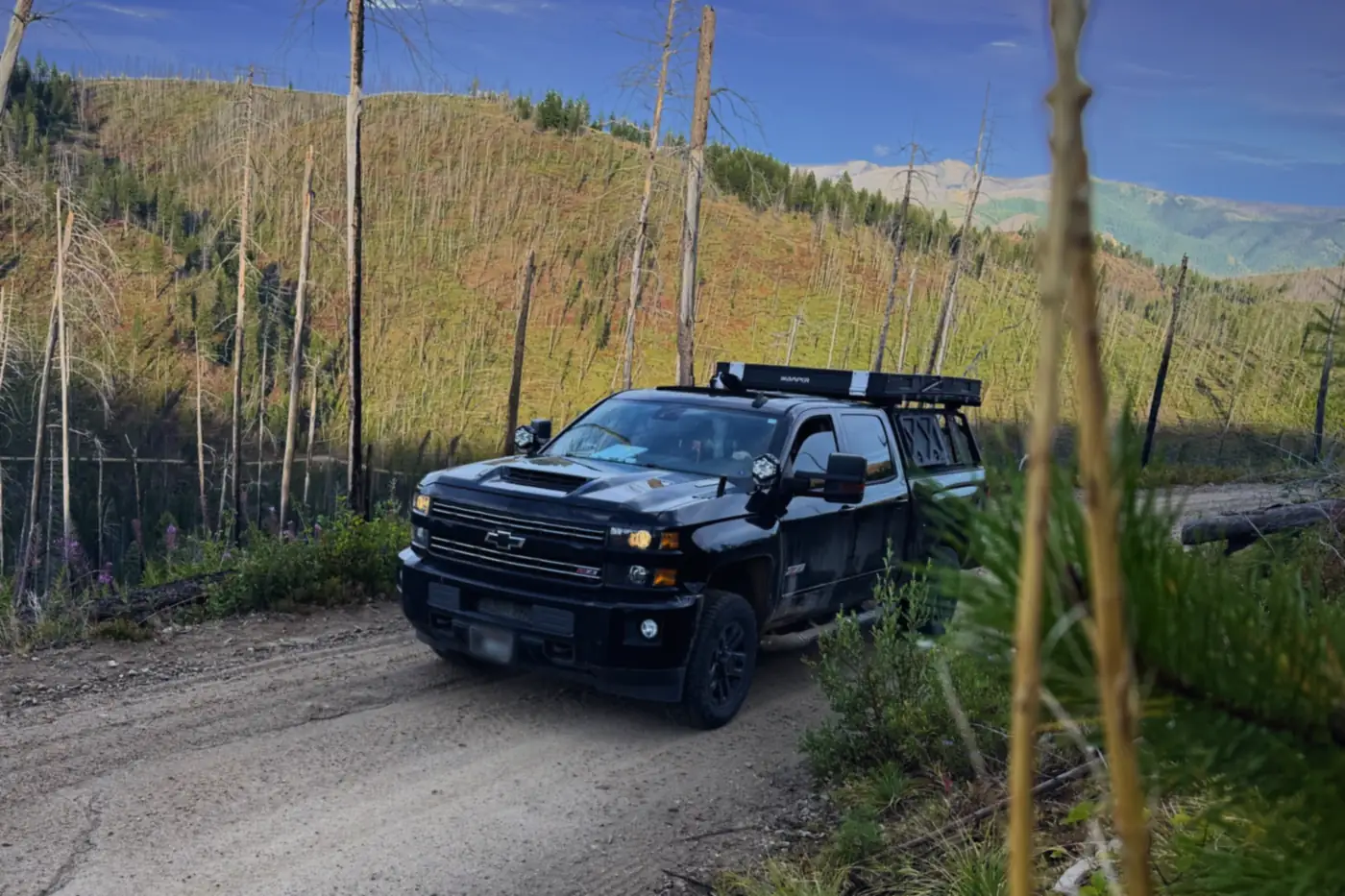
Chevrolet Silverado 2500
The Pioneer
The heavy-lift platform. Recovery equipment, production support, payload, and the gear that keeps the rest of the convoy moving.
- Recovery
- Payload
- Production
Expedition vehicles
A four-vehicle fleet built around capability, redundancy, production, and the reality of moving a team across remote country.
The fleet
Nothing here is a duplicate. Each truck was chosen for a specific role in the convoy, and the fleet is sized so that losing one vehicle slows the expedition down rather than ending it.
Chevrolet Silverado 2500
The heavy-lift platform. Recovery equipment, production support, payload, and the gear that keeps the rest of the convoy moving.
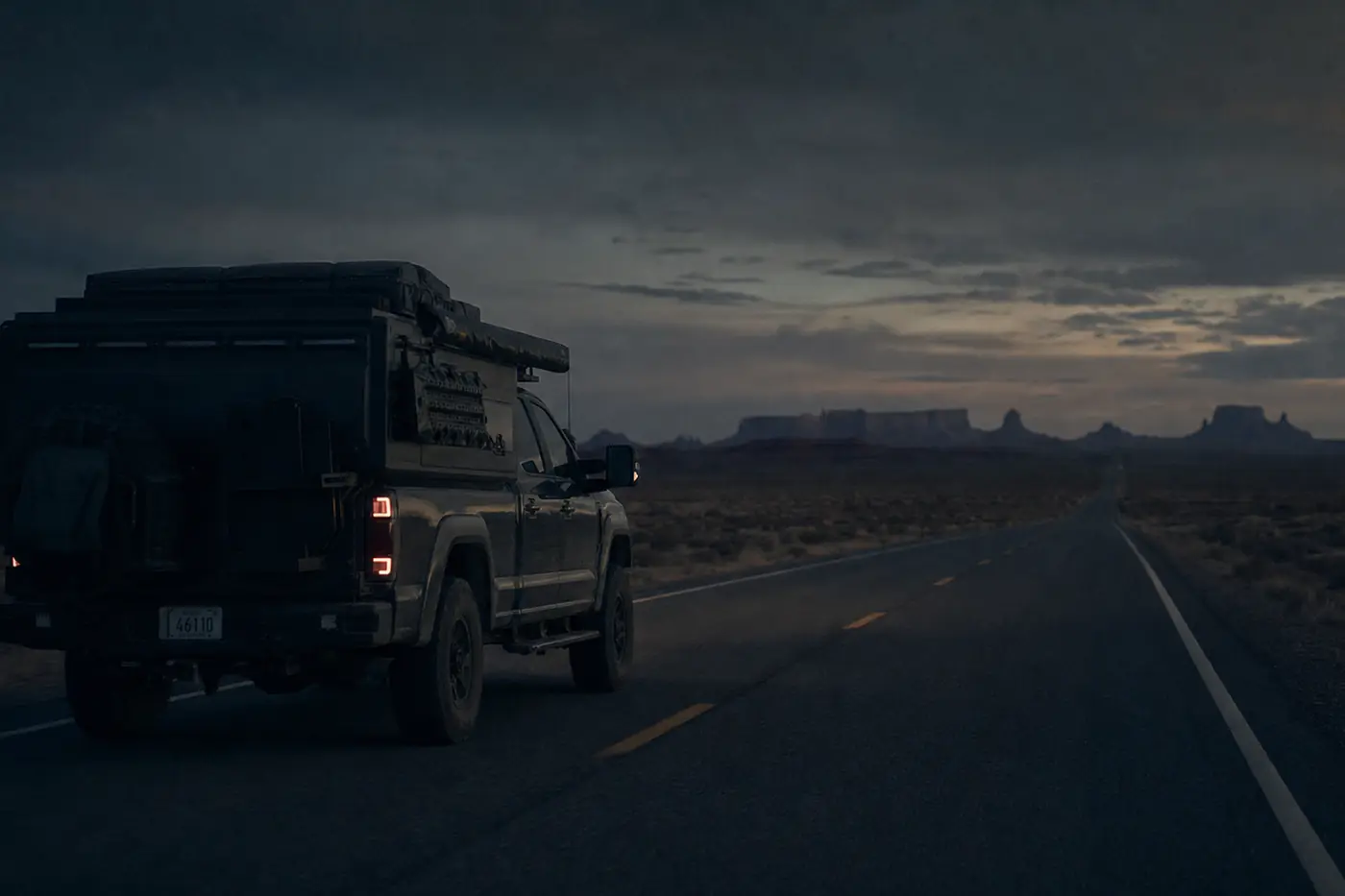
Toyota Tundra
The long-range all-rounder. Comfortable enough for endless highway miles and capable enough when the road disappears.
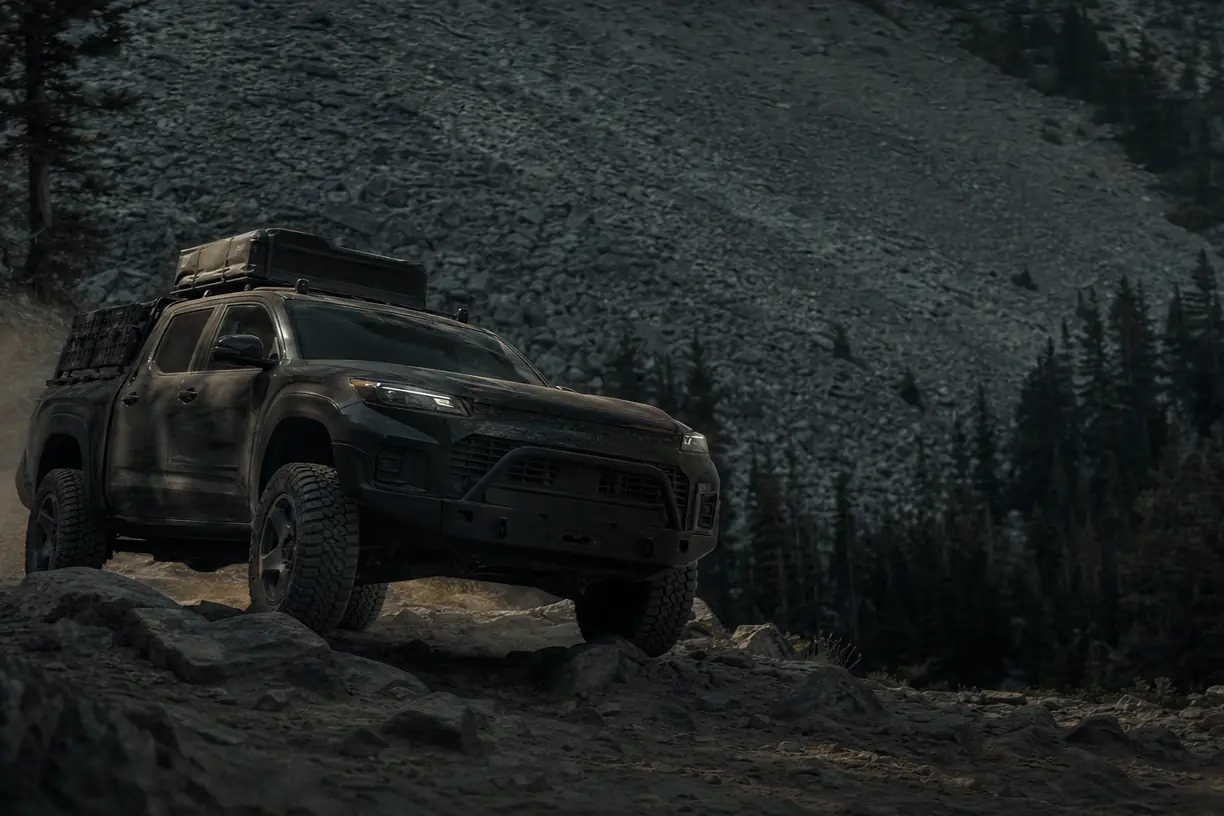
Toyota Tacoma
The route scout. Compact, capable, and built to get ahead of the convoy when the trail becomes uncertain.
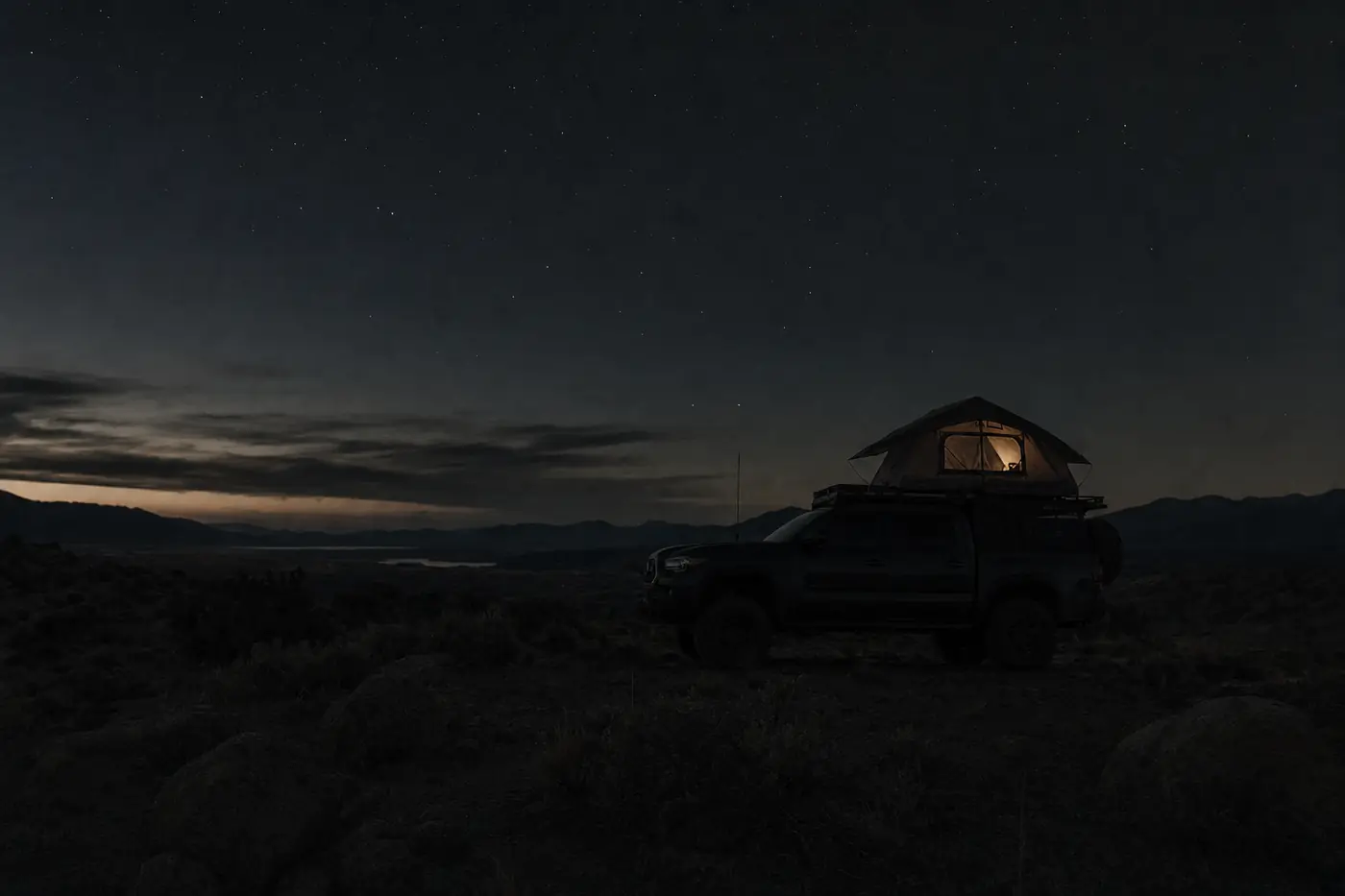
Toyota Tacoma
The flexible support platform. A second light truck adds redundancy, maneuverability, and room for crew or specialized gear.
Designed as a team
The branding stays subtle. The builds remain functional. Every modification exists because the expedition needs it — not because the parking lot does.
Each platform has a different job, but the system only works when every vehicle supports the rest. Redundancy is not a luxury when the nearest shop is two hundred miles behind you.
01 / Build philosophy
The single most common mistake in an overland build is treating payload as an afterthought. A half-ton truck with a rooftop tent, a drawer system, water, fuel, recovery gear, four camera cases and two people is frequently over its rated capacity before anyone opens a catalog — and once you are over, suspension upgrades do not fix it. They hide it.
So the fleet is spec’d from the load out, not from the wish list. The Pioneer is a three-quarter-ton for exactly this reason: it carries the weight the rest of the convoy cannot, which is what lets the Tacomas stay light and actually agile instead of becoming slow, overloaded versions of a bigger truck.
The order we build in is deliberate. Tires and recovery points first, because they are what gets you unstuck. Then reliability — fluids, filtration, cooling, a second battery, a usable full-size spare. Then load management. Then, last, comfort. Nothing goes on a vehicle until we can answer what it does at mile 4,000 on a road with no exit.
02 / Redundancy
Redundancy is not about carrying spares for everything. It is about identifying the small number of failures that end an expedition rather than delay one, and making sure each of those has a second answer somewhere in the convoy.
Tires are the obvious case: one full-size spare per vehicle, plus a plug kit and a compressor that can actually reseat a bead. Power is the next — a dead starting battery in a place with no traffic is not an inconvenience, it is the whole trip. Then communication, which is why we run satellite messaging and vehicle-to-vehicle radio rather than relying on a signal that is not there. And then the footage itself, which is backed up to two physical locations in two different vehicles every single night, because the one thing you genuinely cannot re-shoot is a road you already drove.
Two vehicles minimum on anything remote. A winch is useful; a second truck is better.
03 / Filming from a build
Building a truck to travel and building a truck to film from are not the same job, and most builds only solve the first. Gear has to come out fast, in weather, in the dark, without unpacking the whole bed — a beautiful drawer system that requires moving three Pelican cases to reach a lens will cost you the shot every time.
Power budget is the constraint nobody plans for. Camera batteries, drone batteries, two laptops, hard drives and a monitor draw far more over a week than a fridge and some lights, and it all has to recharge off a vehicle that spends its days at 12 mph. Vibration is the other one: a rack that is fine for a tent will destroy a hard drive over a hundred miles of washboard.
All of which is why we test the build on a short route before it carries a long one. The mini expeditions exist so the failures happen close to home.
Built together
Field testing across a full expedition season, documented honestly and shot properly.
Talk about field testing